
The Compact Separation and Compression Unit (CSU)
CSU significantly reduces cost, weight, and environmental footprint compared to conventional solutions.
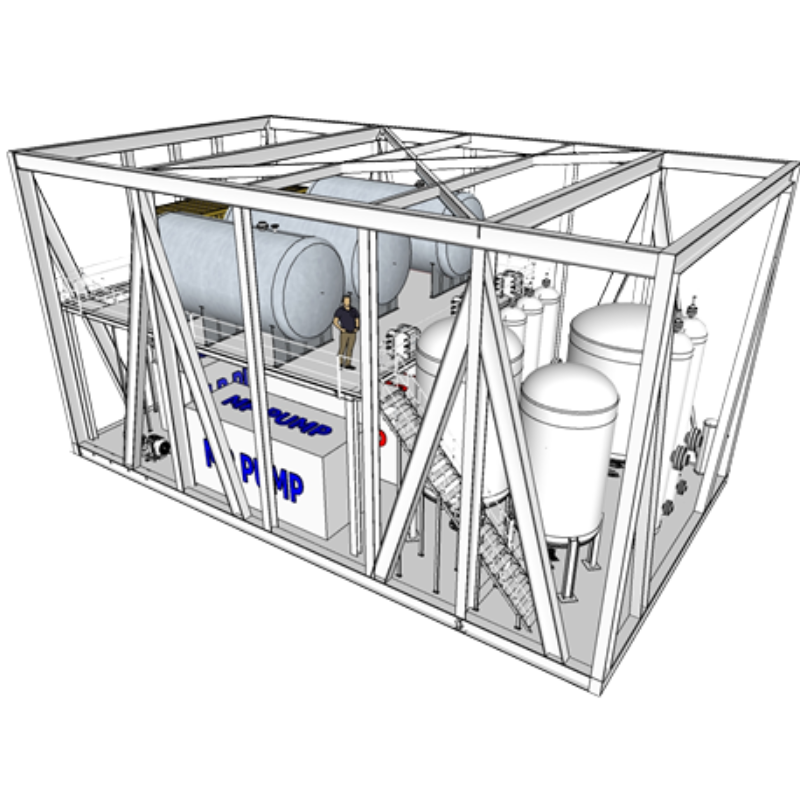
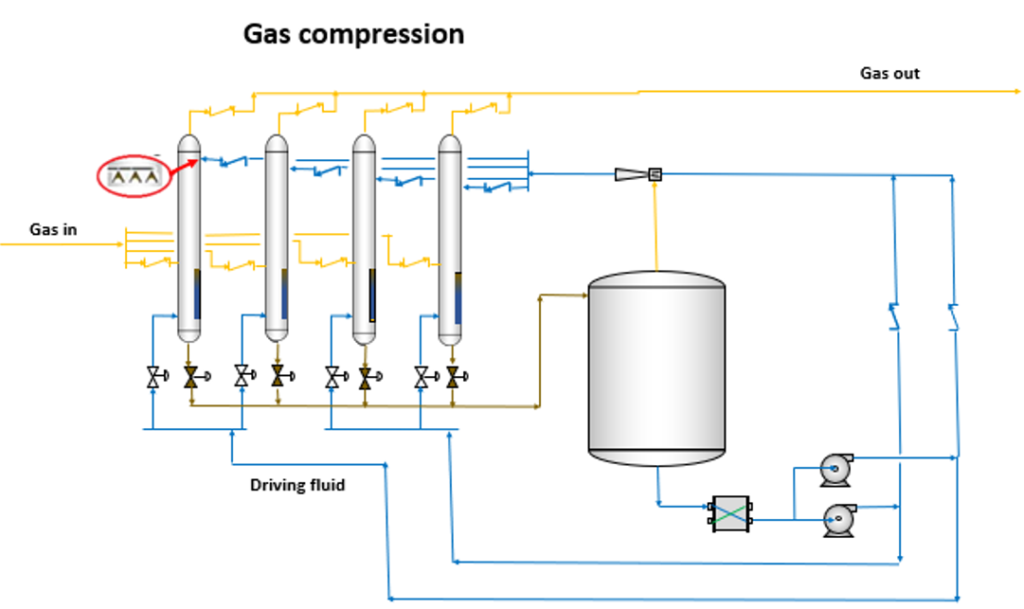
The Compact Separation and Compression Unit (CSU) is a groundbreaking technology developed by Straen Energy. The system includes a new way of compressing gas by using a driving fluid to compress gas in vertical cylinders. An appropriate number of cylinders and pumps provides a continuous inlet and outlet flow of gas.
Our Technology
The Principles Behind CSU Technology
CSU was developed with a focus on cost reduction, efficiency and safety. The technology introduces solutions that address the challenges of traditional compression systems while providing significant benefits in terms of energy efficiency, weight and space savings, and operational safety. Key principles include:
Efficient isothermal compression
CSU achieves near-isothermal compression using an innovative liquid spray technology that reduces heat buildup during compression. This increases efficiency and reduces energy consumption.
Compact and flexible design
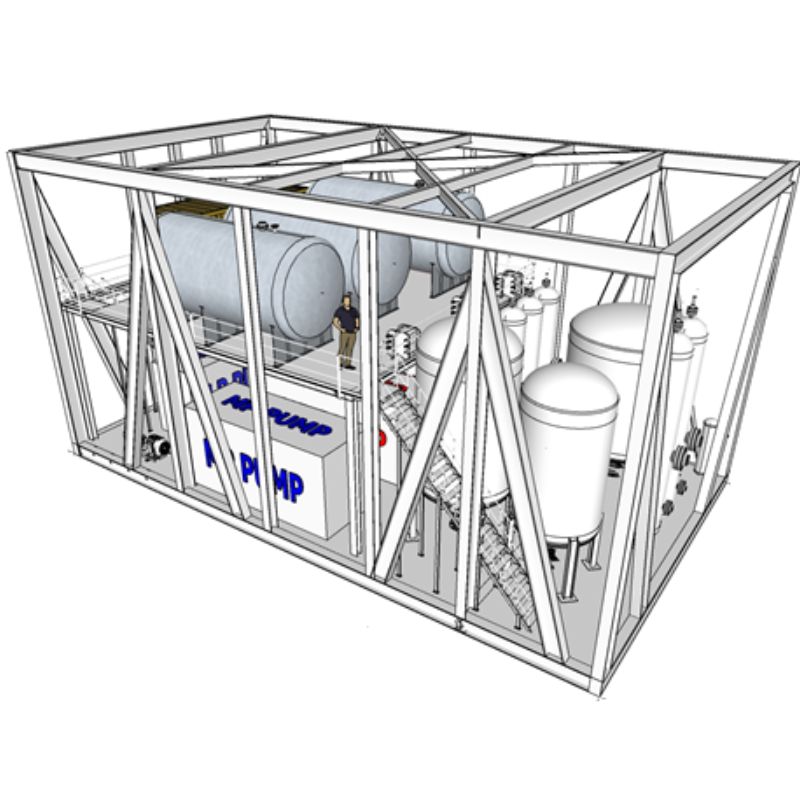
CSU is designed to eliminate the need for multi-stage compressor systems with intercoolers and scrubbers. This results in a more compact solution that is easier to integrate into both new and existing installations.
Safety first
CSU uses a liquid for sealing and compression, eliminating the risk of dynamic leaks in gas service and making the system ideal for handling high-pressure hydrogen and other hazardous gases.
Advantages and Technological Innovations
Instead of traditional mechanical compressors, high-pressure pumped fluid is used to compress the gas directly. The fluid also functions as a cooling medium, eliminating the need for complex cooling systems.
The system is modular, reducing both footprint and weight. This makes CSU well-suited for installation topside on new or existing facilities, as a subsea production unit, or in landbased production or compression systems.
The entire process is monitored and controlled using logical sequencing and instrumentation that ensures precise regulation of pressures, levels, and temperatures. The simplicity of the entire process enables autonomous operation and required service intervals will exceed two years of continuous operation.